







Residents push back on Mesa PD’s 16-year-long agreement with ICE
Concerned Mesa residents voiced opposition to the Mesa Police Department’s long-standing agreement to work with Immigration Customs Enforcement at Mesa City Council meetings for months.
The 287(g) agreement between ICE and Mesa police has been a recurring citizen comment topic since June of 2025. Mesa residents have raised concerns that the agreement creates distrust between constituents and local law enforcement.
Mesa police adopted the 287(g) jail enforcement model in 2009 under the direction of the City Council.
The jail enforcement model allows local police officers to question the immigration status of people arrested and booked in a Mesa holding facility. If an immigrant in Mesa’s custody does not have legal status, they can be reported to ICE.
The Mesa Police Department and Mesa city council have issued multiple public statements to assure that 287(g) targets criminals and is in place for community safety. These statements have not dampened the concerns over ICE’s presence in the city.
Indivisible Mesa grassroots activists collectively want to see the 287(g) agreement with ICE cancelled. Over 3,700 people have signed up for Indivisible Mesa’s mailing list in less than a year, according to organizers.
Jillian Ryan started Indivisible Mesa in November of 2024. She is a Mesa resident and attended Mesa Community College.
“I started this group called Indivisible Mesa as basically a reaction to Trump getting elected again,” said Ryan, “and just wanting to level up my activism and involvement in the community, and just kind of see how else I could make change on a local level.”
There are now over 1,000 287(g) agreements with law enforcement agencies across the nation, a dramatic increase after the Biden administration, according to a September 2025 analysis by the American Immigration Council. There were only 135 active 287(g) agreements in the country by the end of 2024, according to the Migration Policy Institute.

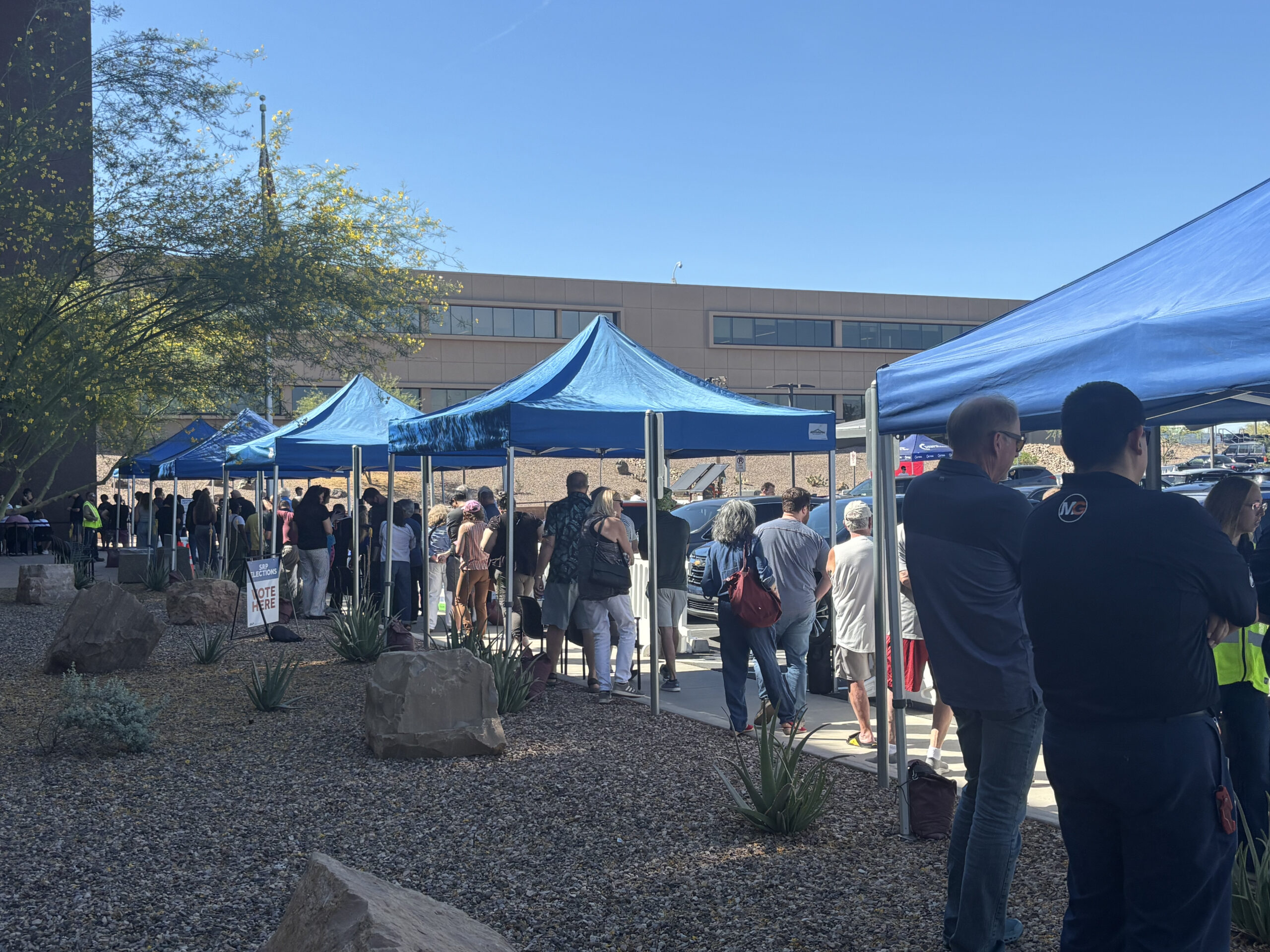
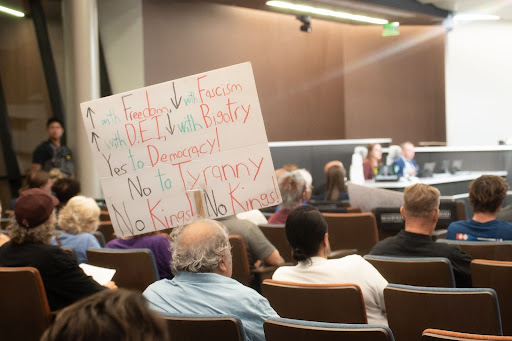
At an Oct. 20 council meeting, citizens posted over 60 comment cards pertaining to 287(g). The majority of these comment cards were in opposition to 287(g). None of these online comments from citizens present were acknowledged aloud at the meeting.
“Why did you let four people speak on September 8th?” Ryan asked repeatedly to the mayor and council on Oct. 20 even after her microphone was cut off.
The mayor allowed four people in support of Mesa’s 287(g) agreement to speak at the Sept. 8 City Council meeting in contrast to the usual three designated speakers, and almost 80 individual names of those who supported the agreement were read aloud by the city clerk.
Mary Anne Mendoza, the mother of former Mesa police Sgt. Brandon Mendoza, was in attendance to share her vocal support of 287(g).
Her son was killed while off-duty by a wrong way drunk driver, Raul Corona-Silva, who was in the U.S, illegally. “Had the 287(g) program been present in Colorado, when he committed a bunch of crimes, and he would have been deported from the country, he would not have ended up here killing my son,” Mendoza said.
At the following council meeting on Sept. 22, over 100 people arrived and advocated for 287(g)’s cancellation. Three members were still allowed to express their reasons for opposition, but unlike previous meetings, all names who submitted comments were not individually read.

“There are many Mesa citizens afraid to be in public spaces with their families for fear of being profiled and forcibly detained. No one should be afraid. No one should be afraid to live, play, and work in their own cities and towns,” Marissa Luna, Mesa resident said, “but agreements like 287(g) make these conditions possible. 287(g) is a welcome sign from Mesa to ICE to come and brutalize our communities,” Luna said.
Mayor Mark Freeman declined requests for an interview with the Mesa Legend in relation to the agreement. Attempts to reach City Council members were also unsuccessful.
The Mesa Legend did receive a statement from City Manager Scott Butler on Oct. 22.
“Mesa’s participation in the program is limited. It applies only within the Mesa Police Department’s holding facility and only to individuals who have already been arrested, charged with a crime, and booked into custody. It does not extend to immigration enforcement in the community.” wrote Butler,
“While recent attention has renewed discussion on this topic, the City continues to view this as a nonpartisan, practical tool that has served Mesa responsibly under multiple federal administrations to help keep residents safe,” Butler said.
The Department of Homeland Security suspended its 287(g) agreement with the Maricopa County Sheriff’s Office (MCSO) under former Sheriff Joe Arpaio in 2011 after a thorough investigation found significant evidence of police discrimination. The MCSO was following the jail enforcement model.
The Department of Justice found that “Latino drivers are four to nine times more likely to be stopped than similarly situated non-Latino drivers” by MCSO traffic stops in the 2011 investigation.
There are two other types of 287(g) agreements that local law enforcement agencies can make with ICE: the warrant service officer program and the task force model.
The task force model was cancelled in 2012 by the Obama administration over concerns for racial profiling, but it was revived on the first day of President Trump’s second term through the executive order titled “Protecting the American People from Invasion.”
Almost 72% of people held in ICE detention have no criminal conviction, and many of those who are convicted committed only minor offenses like traffic violations, according to Transactional Records Access Clearinghouse.
Rocio Patino, Indivisible Mesa organizer, said the agreement is similar to Arizona immigration law SB 1070 and believed it’s unjust for someone to be reported to ICE after being arrested for something minor like a traffic stop.
SB 1070 was an immigration law passed in the U.S., and received national attention and widespread protest in 2010 over concerns that it encouraged racial profiling of Latinos.
The Supreme Court struck down multiple provisions in SB 1070, but Arizona police officers can still demand a person’s federal registration papers if they suspect the person is an undocumented immigrant, according to the American Civil Liberties Union.
Mesa Police Chief Dan Butler declined requests to speak directly with the Mesa Legend.
Mesa Police Department’s immigration facts online page indicates there have been 131 ICE detainers in 2025. A detainer is a request from ICE asking the local law agency to hold the arrested person with suspected illegal status for 48 hours, giving ICE time to assume custody.