







Reason Behind Rose Garden Floods
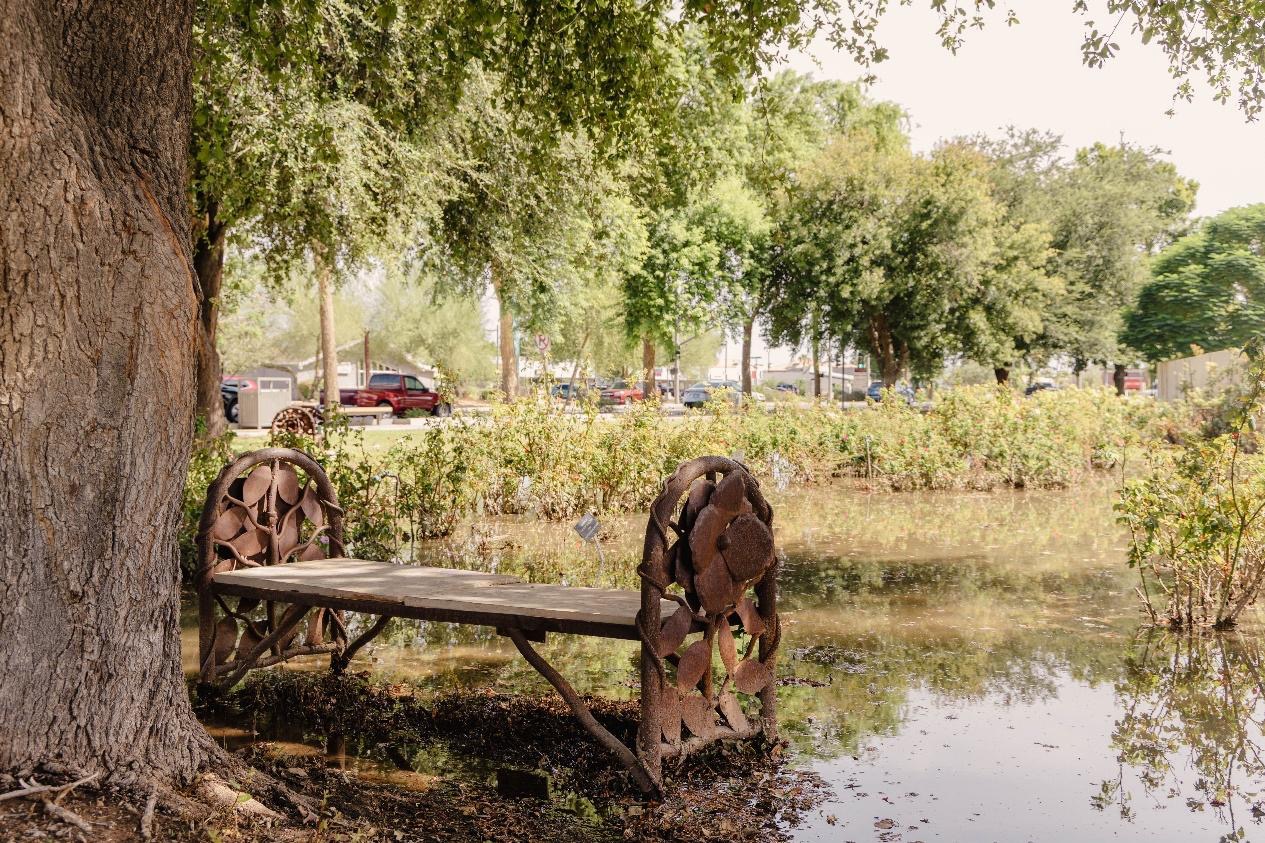
Wandering around the MCC Southern and Dobson campus, students will occasionally find large bodies of water flooding the Rose Garden and other grass areas of the complex.
The school utilizes an old irrigation system from the 1960s—when Mesa Community College was built—which relies on reservoirs of water. This type of irrigation method is called “flood irrigation.”
The Rose Garden is an area on campus that utilizes flood irrigation. Planted in 1974, it is the largest rose garden in the desert Southwest with over 9,000 rose bushes.
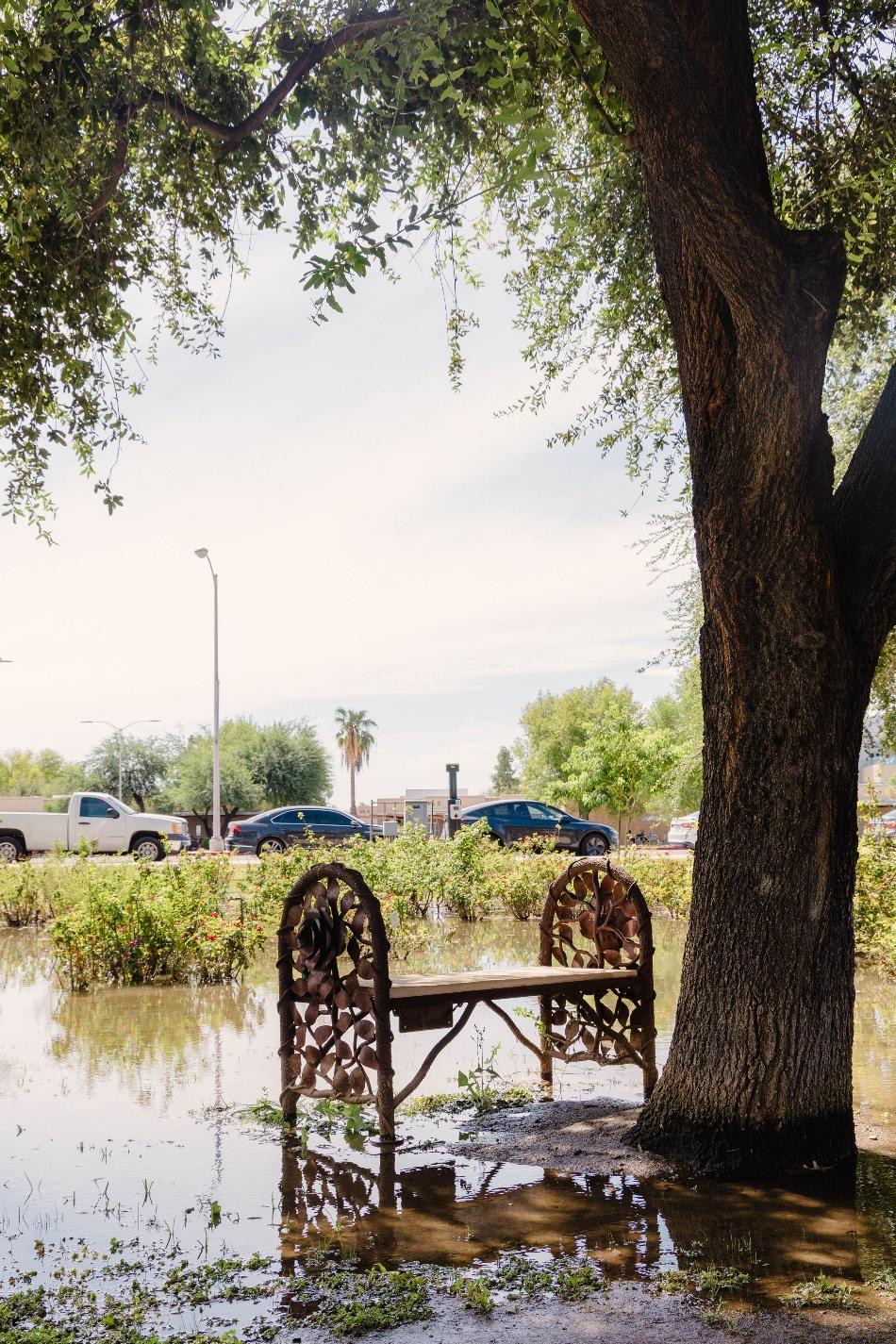
While the occasional irrigation is overwhelming to see, it is vital for the roses’ survival (Photo: Jak Holdcraft / Mesa Legend)
Maintenance purposely makes large pools of water to deeply soak the roots. There are old trees on campus by the clock tower that require flood irrigation to stay alive too.
“Those roses require at least 18 to 24 inches of water to get out into the root zone, and the only way to accomplish that is with flood irrigation,” said Cory Tait, MCC’s maintenance operations manager. “It’s not the most efficient system but when you have a campus that already has trees that are sometimes up to 30 years old, they’re used to that deep watering.”
As for the large pools of water, the grass areas operate like “retention areas,” holding water for up to two days at a time.
For smaller and newer areas of the campus, such as the Xeriscape Demonstration Garden located in the southern part of the campus, MCC uses a drip system on a timer.
The drip system is very efficient in water usage, however it doesn’t give the rose bushes or 30-year-old trees enough water to survive.
“Typically, 30 minutes of drip will give you about a quarter inch of penetration into the ground”, said Tait. “In order to get that 18 to 24 inches of penetration into the ground, you would need almost 2 full days of continuous drip running to get to that level of the root.”
While Tait said that maintenance is actively replanting areas and being mindful of water and how much water plants need, the main reason for using flood irrigation is the Rose Garden.
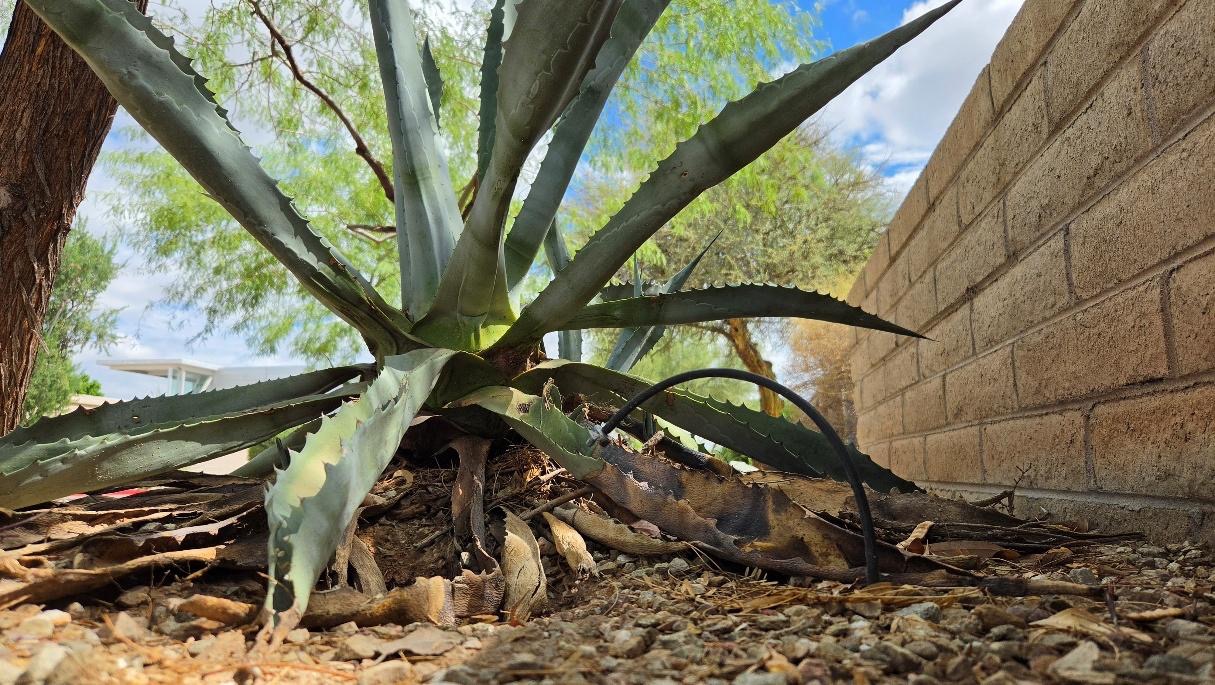
Agave americana utilizing a drip system in the Xeriscape Demonstration Garden (Photo: Nathan Smith / Mesa Legend)
Historically, Mesa was an agricultural city dating as far back as late 700 A.D. by the Hohokam tribe, building intricate canals to divert water in order to grow maize and beans. The Hohokam people left the valley in the 1400s, but the canals remained. In 1878, the colonists used parts of an abandoned Hohokam canal as part of their first large-scale irrigation project: the Mesa Canal.
Peter Conden, director of the Sustainable Horticulture program, added that if plants aren’t receiving the proper amount of water, they can end up not receiving the proper nutrients.
“It’s like us,” said Conden, “if we’re well fed and we have a good amount of water in our bodies, we’re going to be healthier, we’re going to grow better, we’re going to resist diseases better.”
Conden also stated that water is a key foundation to all life, not just plants. “Water’s the basis of life within it,” said Coden. “Once they lose water, they lose the capacity to live.”
