



A 20-year-long enduring opportunity for Native American youth
A two-decade-long program dedicated to providing Native American high school students a direct pathway to higher education has persisted at Mesa Community College despite barriers.
The Hoop of Learning program (HOL), active at MCC since 2006, provides a scholarship for Native high school students to earn up to 36 college credits for free before they graduate. Unlike other opportunities through Maricopa Community College District to earn college credit while in high school, the program is specially designed for Native students and intertwines cultural elements with their studies.
HOL struggles after pandemic
HOL saw a significant enrollment loss after the COVID-19 pandemic they have been trying to gradually recover from, Early College Programs Director Monica Margaillan said. The HOL program currently has funding for up to 100 students, but MCC had 31 HOL students the fall 2025 semester.
“After COVID, the numbers went down tremendously,” said Margaillan.
Margaillan said HOL and the Achieving College Education (ACE) program, another scholarship opportunity for high school students, competes with dual enrollment for funding. Dual enrollment allows college students to earn college credits through their high school classes.
While Margaillan said dual enrollment is a great opportunity, she thinks ACE and HOL deserve recognition for the unique assets they offer students.
“These are really great scholarship programs for our kiddos at the high school level where they can have a taste of what college life is, and the fact that they can do both and navigate both systems, the high school system, and the college system, and they’re successful,” said Margaillan. “They thrive, they create relationships, they bond.”
MCC holds the largest HOL enrollment out of any college in the entire Maricopa Community College district.

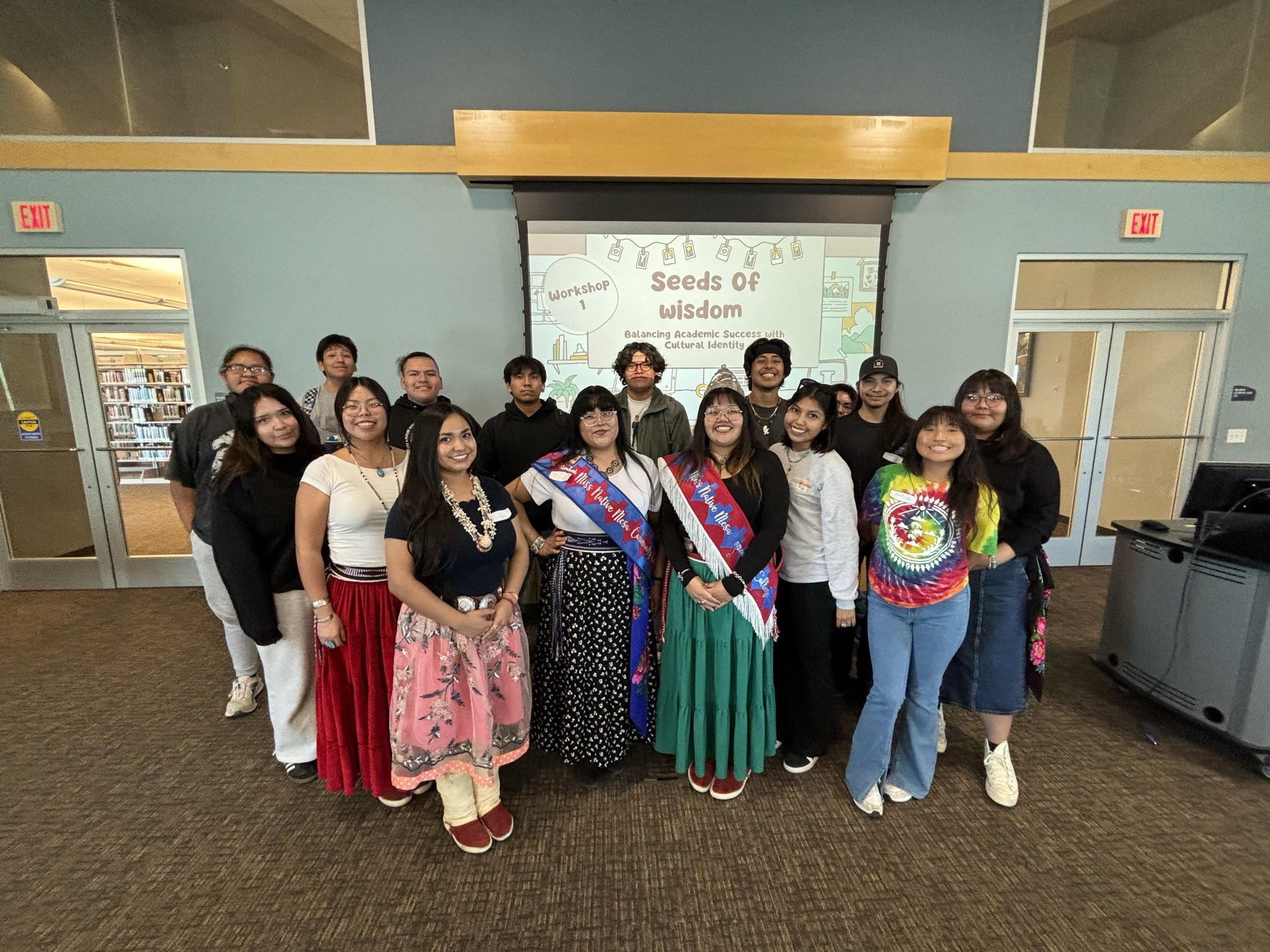
MCC Hoop of Learning students in the spring of 2025 receiving certificates for completing the seeds of wisdom program. (Photo: Celeste Whiterock)
Mixed responses from high school students
Margaillan said MCC presented the HOL program to students at Carson Junior High in 2024, but many seemed disengaged. She said many students unfortunately don’t see the value in higher education, so recruitment can be hit or miss.
“Some students don’t see the value of higher education, unfortunately. They only think, well, ‘it’s very expensive. I don’t want to get into debt.’ That’s their mindset. But when we talk to them about this opportunity, I mean, you’re looking at 36 college credits [for] free,” Margaillan said, “I wish they could see that.”
While there is some discouragement among students, Margaillan also pointed out “we have students that have 4.0 GPAs, and they’re doing wonderfully at the high school. And it’s showing proof that they’re doing much better at their college courses than their high school courses.”
Professor blends cultural with studies
Dr. Mona Scott Figueroa teaches an intro to American Indian Studies course at MCC to high school students who first join HOL during the summer.
“I teach this class to help students realize that they can reclaim the language, they can reclaim their culture. They can practice their traditions right now, here in Mesa or Chandler, wherever they live. You don’t have to go up north back to your community to practice a lot of our traditions,” said Figueroa.
Figueroa, a Navajo woman, said she wants to give back to her community and increase diversity in higher education and professional fields.
“I wanted to focus on native students because they have the lowest graduation rates from high school and college. They have the lowest degree attainment rates. They as youth, they have the highest suicide rate. I mean, native people have been pushed to the margin so much that all the damage that’s been done historically is still with us today,” said Figueroa, “I want to try to increase enrollment for native students because we need native—we need native people in the world in professional positions.”
Figueroa said she sees massive transformations in students who take her course. She likes to bring her students into the community and out of the classroom during the class.
In 2023, Scott brought students to an indigenous education conference at the University of Arizona where students could discuss what kind of school curriculum is needed for native students to help them feel empowered.
“Students shared that this was… the most comfortable space they had ever been in an academic environment, that adults welcomed them when they walked in, that adults asked for their opinion. They gave them leadership responsibilities. Oh, it was beautiful,” Figueroa emphasized.

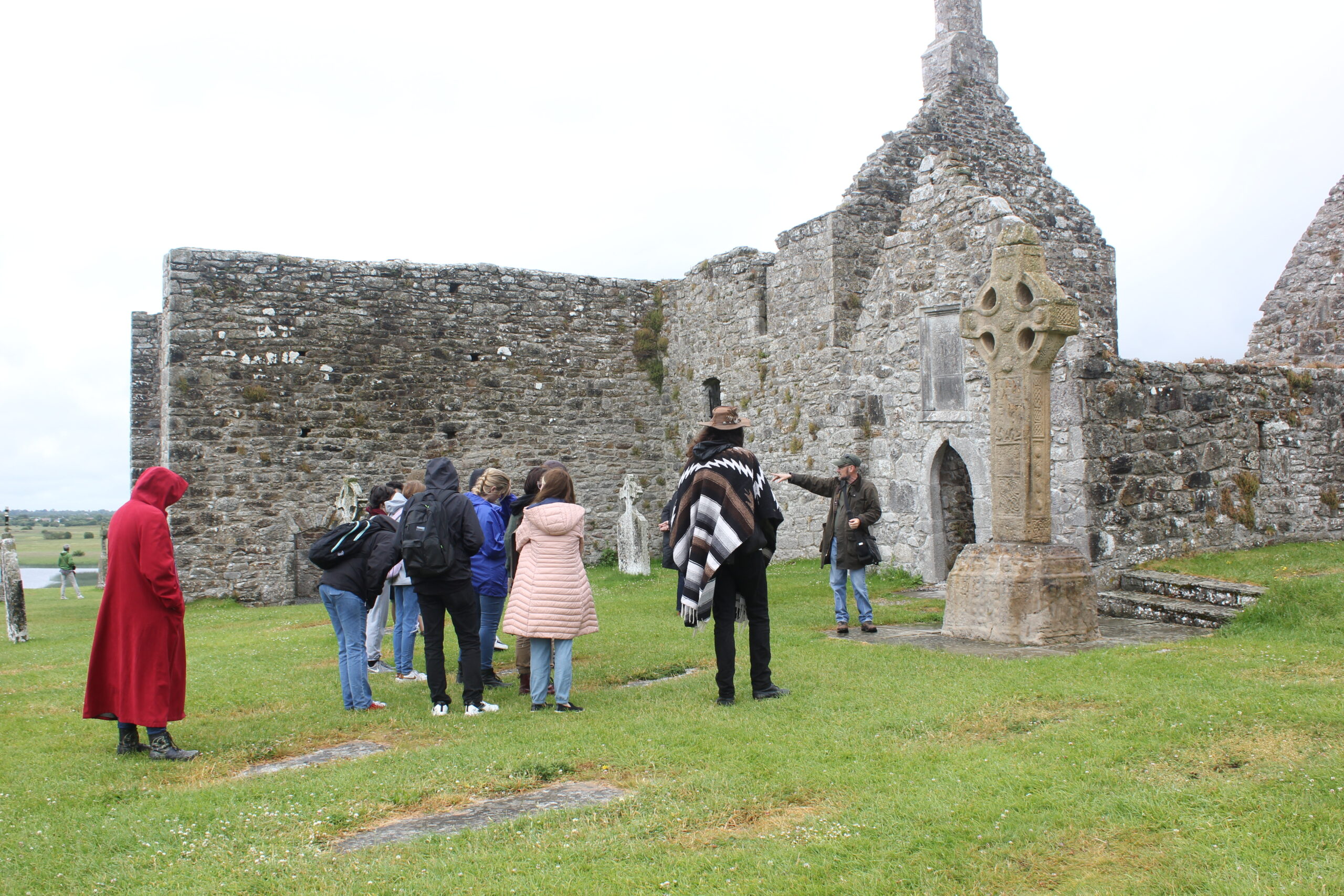
Professor Mona Scott Figueroa with her Intro to American Indian Studies class at a University of Arizona conference in the summer of 2023. (Photo: Mona Scott Figueroa)
Students share rewarding experiences
Jon-Christopher Nosie Jr., a new MCC student who graduated from Mesa High School in 2025, said “coming into the program really opened my eyes to the culture of other tribes and made me think about my own tribe and what our culture is.” Nosie said he didn’t know a lot about his own culture prior to HOL because he lives in a city.
In the summer of 2023, Nosie attended the UofA conference and a separate field trip to New Mexico during a traditional Pueblo Feast Day where they ate food alongside community members and watched an Indigenous ceremony.
Figueroa stressed the importance of these field trips, but she said she wasn’t able to take her last summer of 2025 class on larger trips like this because of budget constraints. She hopes to take her next summer class to the Navajo Nation.
What made MCC’s HOL program particularly unique was a mentorship program called the seeds of wisdom. Native MCC students had the opportunity to connect high school HOL students to resources the college provides and give personal insight into their college journeys.
Margaillan said Seeds of Wisdom (SOW) was a great way for students to get a cultural component within their required workshops in the program.
SOW was unable to continue this fall of 2025 semester because of staffing constraints, according to Margaillan.
The program was provided in coordination with MCC’s American Indian Institute (AII). The AII currently has only one advisor and full-time staff member, so this meant other responsibilities had to be prioritized over SOW, according to Margaillan.
Celeste Whiterock, an MCC student who was part of HOL at South Mountain Community College, said becoming a mentor through SOW helped her solidify a career goal in teaching.
“I don’t think I really knew I wanted to do history or teaching, specifically. But then, the more I did it and the more I hung around other native students and also had access to native resources, I was like, oh okay, this is definitely something I think is my field,” said Whiterock.
Whiterock said there’s an importance to maintaining a program specifically for students who are Native to enroll in higher education. She said SOW and HOL made her consider taking her education further.
“The seeds of wisdom program and the hoop of learning program combined, they kind of taught me and like guided me into what I wanted to do more specifically and taught me the skills on how to do that,” Whiterock said. “It overall just also made me want to do more, like, I didn’t think I wanted to get a master’s degree. But after I did that program, I was like, oh, maybe I should get a master’s and then work at college afterwards.”