





Butterflies flutter back to Desert Botanical Garden this fall
Desert Botanical Garden is returning with its annual butterfly exhibit this year, to showcase various native species in an effort to educate visitors about their role in the ecosystem.
“Butterflies are important for the ecosystem; they serve as food for other organisms and they’re pollinators,” said Natalie Melkonoff, plant and insect ecology program manager at DBG.
The presence of butterflies in gardens like this, she says, is critical for the reproduction of many plant species and supports local food chains. “Numerous insects, birds, reptiles, and small mammals feed on butterflies,” Melkonoff said.
“We have 2,000 butterflies,” said Julia Wright, nursery lead for the Seasonal Exhibit Department at DBG.
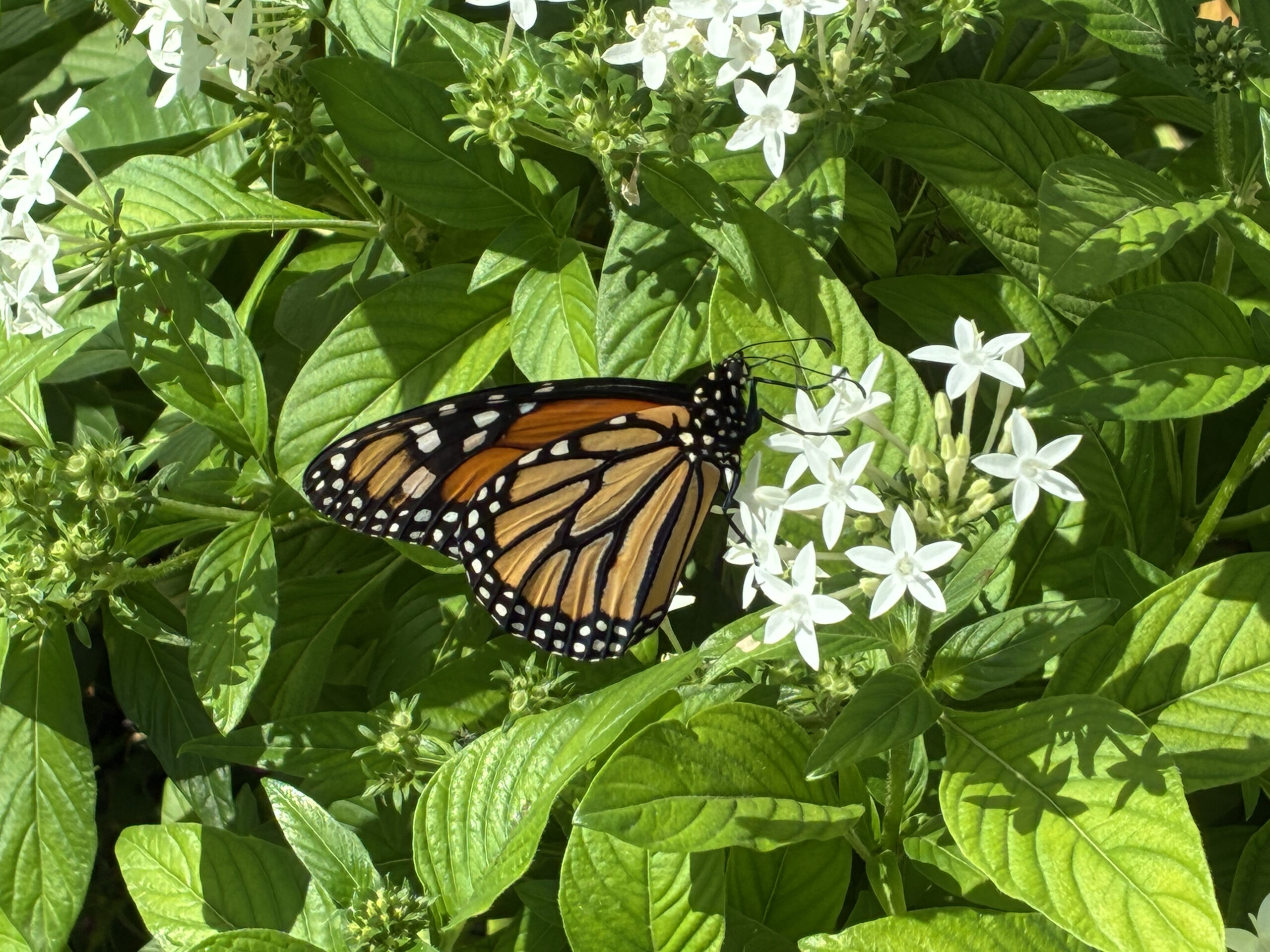
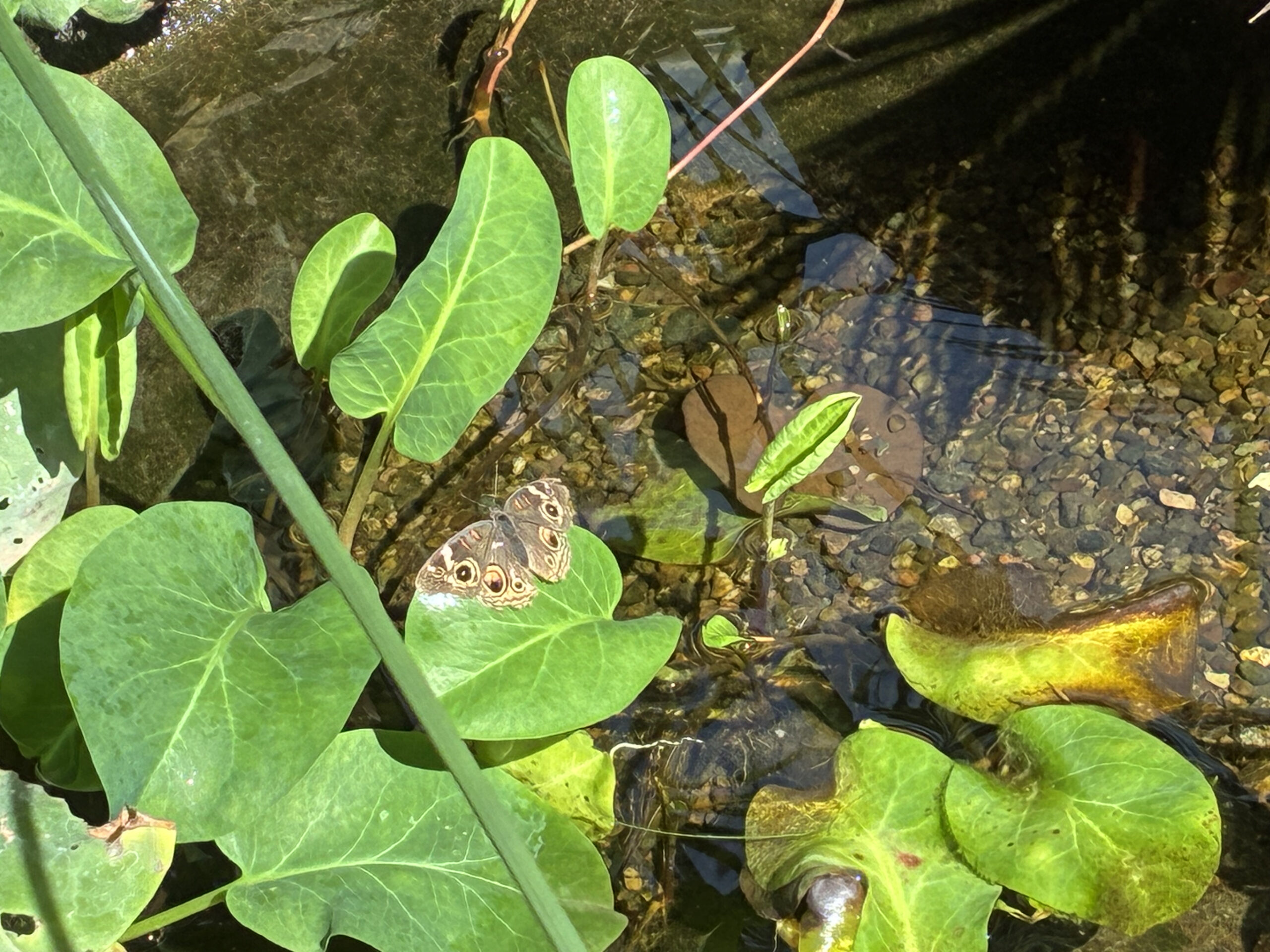
The majority of species seen by visitors are either native or migratory to Arizona. Milkweed, swallowtail, and sulfur butterflies are among the most commonly bred in the garden, she said.
Visitors from all over the world who come to DBG will recognize a familiar face: the painted lady. They are native to all seven continents except Australia and Antarctica.
Wright, who is also a biology student at Mesa Community College, says none of these butterflies are currently classified as endangered. However, she mentioned the status of the monarch is now being reconsidered.
“Based on recent years, it can be kind of hard to tell,” she said. “Since they naturally kind of ebb and flow because of their strategy.”
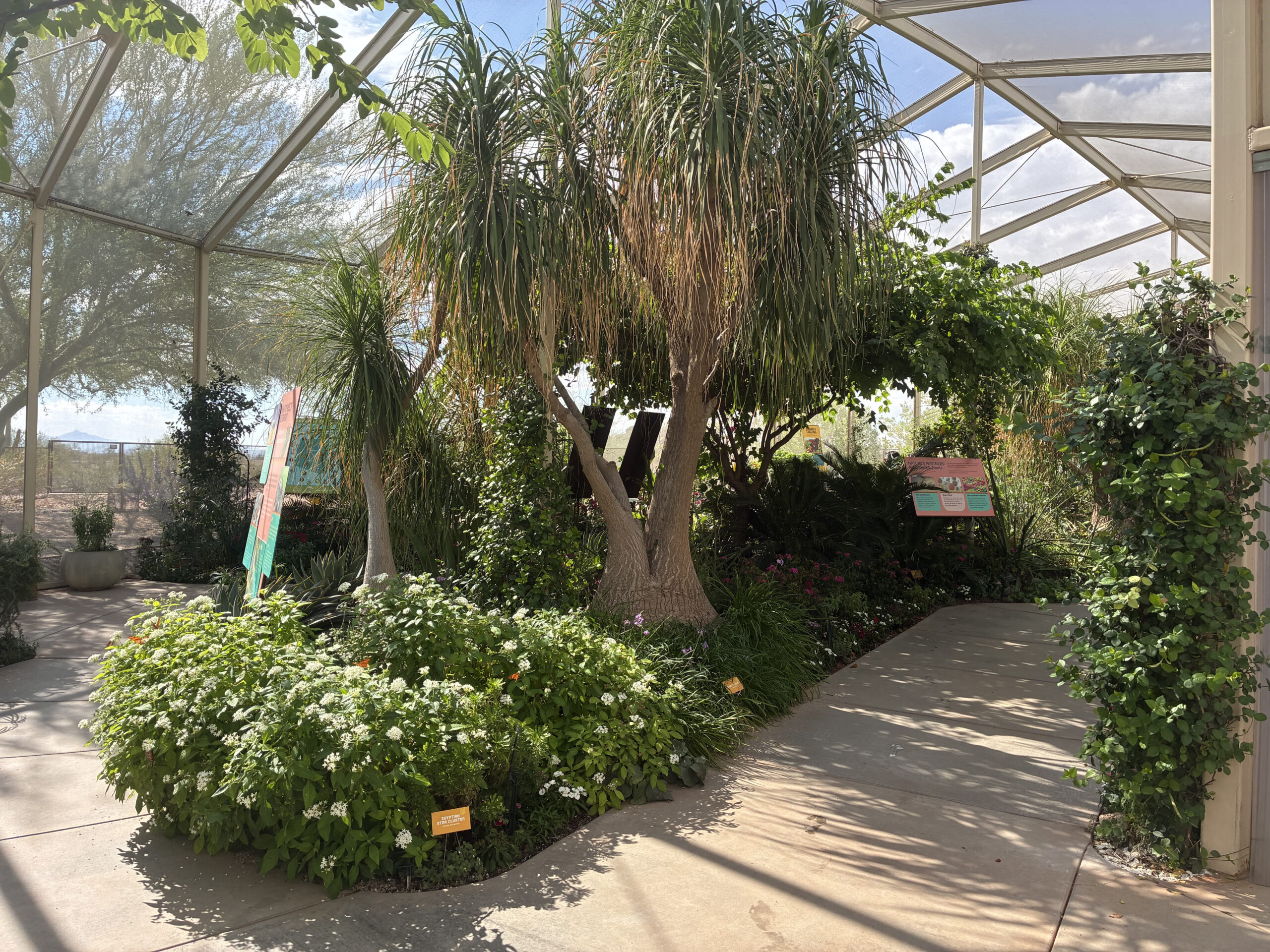
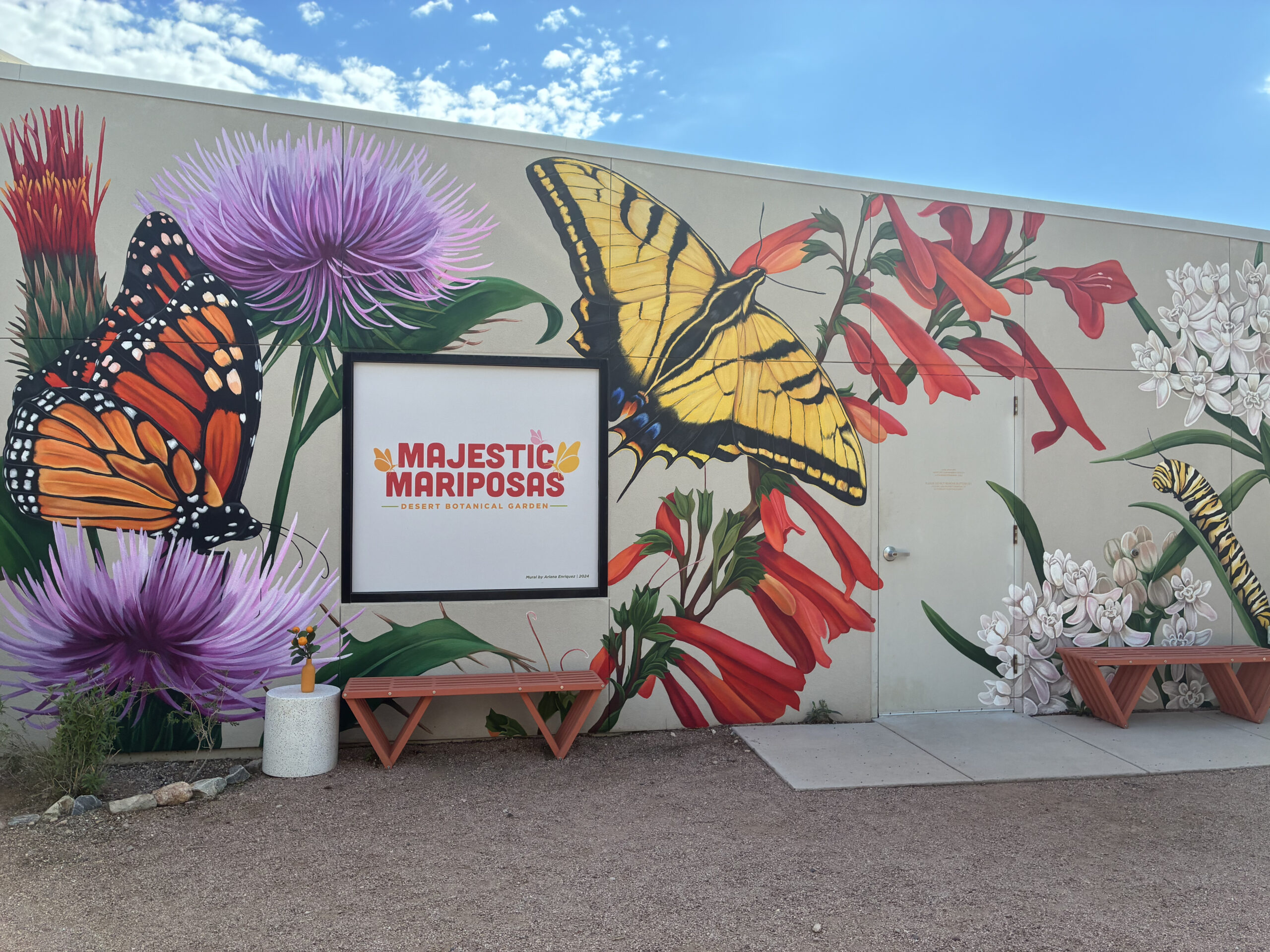
Monarch populations naturally fluctuate with periods of decline followed by recovery due to environmental factors. Experts nationwide are still determining whether the current decrease is more significant than historical trends, she said.
Melkonoff says the Southwest region is dealing with drier conditions that put both host plants and butterfly survival at risk. Without regular rainfall, these plants may not be able to germinate and develop properly.
“There is a benefit in choosing butterflies as the poster child pollinator,” said Wright. According to her, this is because most people already admire and appreciate butterflies.
Bees are the other major pollinators, she said, with flies and other winged-insects being a smaller fraction. “But if they appreciate the role that butterflies play as pollinators, they will appreciate that role from other bugs,” she said.
According to her, the only concerns with the self-tour exhibit are instances where guests accidentally step or mishandle the butterflies.
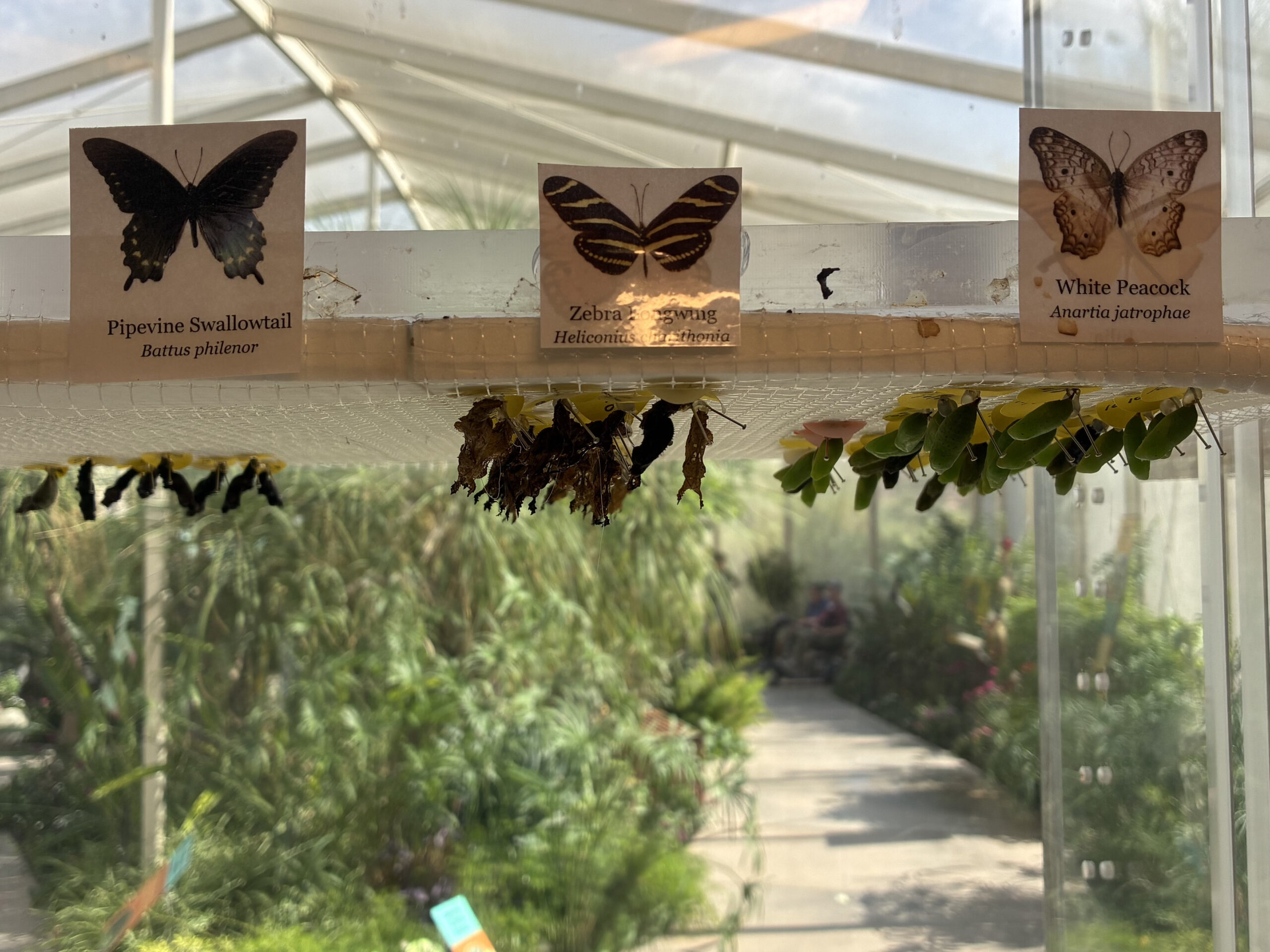
“Making sure guests are informed before they enter the space protects the butterflies,” she said. Included in the exhibit is a butterfly station where people can see chrysalises hung up in glass cabinets and caterpillars crawling on host plants.
There is a two-door system that visitors must use to ensure that no butterfly escapes from the mesh pavilion and becomes vulnerable to predators. Specific humidity levels are kept between 70% and 90% to ensure that the butterflies thrive, she said.
According to Wright, any research projects conducted at DBG are generally not open to the public. While there are no special programs tied to the exhibit, schools can coordinate field trip group tours through DBG’s marketing department.
“The exhibit is a fantastic place for people to come see butterflies up close and experience the entire lifecycle,” Melkonoff said.
An adult ticket for ages 18 and older costs $39.95, while a youth ticket for ages 3 to 17 is $19.95. Babies and toddlers ages 0 to 2 get in for free.
Desert Botanical Garden is located in Phoenix on the crossroads of North Galvin Parkway and East McDowell Road. Handicap-accessible parking and walkways are available all throughout the location.
The exhibit is open until Nov. 16.