


Federal work study change affects MCC students. Here’s how
College students across the nation can no longer use Federal Work-Study (FWS) funds to register their peers to vote on campus after the U.S. Department of Education’s new interpretation of voter assistance as political activity.
Students are now unauthorized to receive federal funds for any work related to voter registration, voter assistance, or poll work. However, Mesa Community College staff have found solutions to help students receive FWS for their civic work so they may continue to participate in extracurricular activities that supplement their academic resumes.
New DOE rule changes federal work-study eligibility
The new interpretation was issued to postsecondary institutions across the nation one week before the start of the MCC fall 2025 semester in a “Dear Colleague” guidance letter. The letter argues that jobs involving voter registration, partisan or nonpartisan, involve political activity.
The letter rescinded the Biden administration’s previous guidelines that highlighted postsecondary institutions as critical in supporting participation in the electoral process and specifically allowed students to use FWS funds for voter registration activities if they were employed by their institutions.
MCC program adjusts to sudden restrictions
MCC’s Center for Community and Civic Engagement (CCCE) planned to use federal student workers to distribute voter registration forms and promote election education in their 2024-2025 Campus Democratic Engagement Plan. The letter directly undermines MCC’s strategy to engage students in democracy.
Alejandra Maya, CCCE program coordinator, said it’s been difficult to work around the new restrictions. Now, she only has student federal workers assist in other activities with CCCE that don’t involve them directly telling other students about registering to vote.
Nonprofits step in to fill the gap
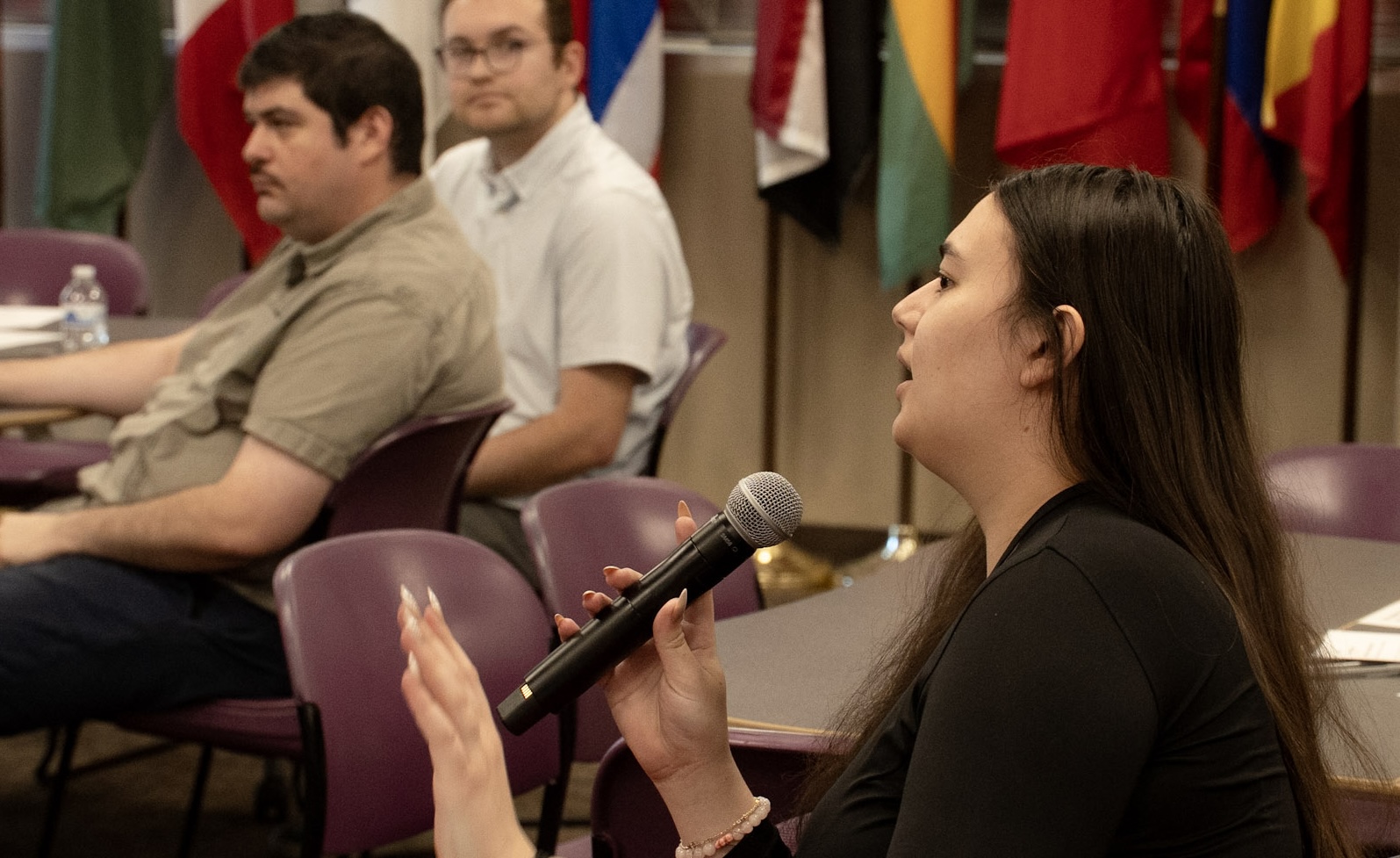
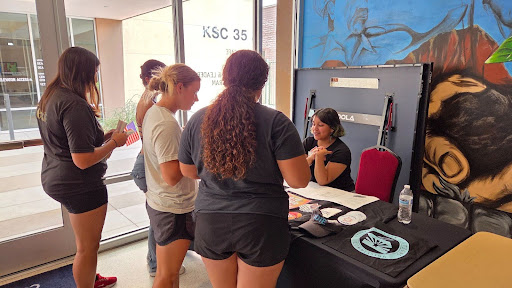
The Fair Election Center Campus Vote Project (CVP), a voting rights nonprofit, provided voting resources and assistance to students on the MCC campus on the National Voter Registration Day event, but federal student workers could not directly assist with this effort like in years past.
“The federal work-study students helped prep with making the event happen, helped with the balloons, they helped with the check-in table,” said Maya, “they were not telling students to register vote, they were not telling students about information, they were just pointing the students out to the tables to go talk to.”
MCC is still required to make a good faith effort to distribute voter registration information to enrolled students as part of a Higher Education Act of 1965 (HEA) requirement.
Mike Burns, national director of CVP, voiced his disappointment about the DOE letter. He said it’s unreasonable for colleges and universities to not allow federal student workers to aid in meeting their legal requirement to distribute voter registration information to students.
“Even the letter that this current administration issued still cites the HEA requirement, that institutions have to comply with about distributing voter registration forms to all students physically in attendance and in degree seeking programs… ” said Burns, “it was very confusing to us that a letter would highlight that is a statutory requirement of institutions, but then say that institutions can’t have on-campus federal work study roles that help with voter registration.”
Federal work-study created to support students in need
The federal work-study program was created in 1964 to provide part-time jobs to students who demonstrate financial need. The program aims to help students meet their educational costs while gaining experience in civic education roles or work related to the student’s course of study.
“This was a way for especially low-income students to both be able to be more civically engaged and have these types of roles and experiences while also meeting their financial need to attend their institution,” Burns emphasized.
Students share frustration and determination
CVP is one of the non-profit voting rights organizations affiliated with the CCCE, so students can still work through CVP to receive stipends for voter registration and assistance as well as through the Andrew Goodman Foundation and the MCC Votes team.
Ben Claustro, a student employed by the CCCE and Andrew Goodman Foundation member, said it was already challenging when to register students to vote in the past because of social aspects. Claustro said having conversations about registering to vote with people can be difficult, like approaching a bunny who is easily alarmed. He thinks the new FWS parameters in the letter are just another obstacle to work around.
“Honestly, we were told beforehand to get used to getting more no’s than yeses,” said Claustro in regard to publicly distributing voter registration.
“Under a healthy government, voting should be as mundane, and like not intense as… going to the grocery store, or like brushing your teeth, but that’s not the government we have,” said Claustro.
Leo Warnick, another student employed by the CCCE, said he would have liked to have the opportunity to register students to vote as a federal student worker this semester and was frustrated by the DOE’s interpretation. He said it’s not democratic for people to not encourage others to vote.
“If we’re not supporting people registering to vote, then, like, what’s even the point of pretending we’re a democracy, right? Like, we are a democracy, but we also have to act like it,” said Warnick.
Change linked to Trump election order
The letter encourages institutions to give guidelines on the “eligibility criteria for voting under federal, state, and municipal law” to prevent voter fraud, such as reminding students that they can only vote in elections once, only U.S. citizens may vote and providing false information knowingly on registration forms is strictly prohibited. The letter appears related to President Trump’s executive order issued on March 25, 2025 titled “Preserving and Protecting the Integrity of American Elections.” The order says elections have failed to enforce basic and necessary election protections, and states must enforce safeguards to prevent widespread election fraud.