

Students transform plastic into bedding for homeless
The Center for Community & Civic Engagement hosted a two day pop-up event for their ongoing ‘Beds2Bags’ program which turns plastic bags into cheap and sustainable sleeping mats that are donated to homeless shelters across Arizona.
Hosted on Feb. 10 and 11 at the Southern and Dobson campus, the pop-up event served as a way for students to contribute to their community, but it was also an opportunity to learn about what it means to be sustainable.
“It’s definitely one way for students to help with recycling on campus,” said Andrea Sanchez, senior administrative specialist at the CCCE. “I’m pretty sure everybody has a big old stack of grocery bags laying around their house.”
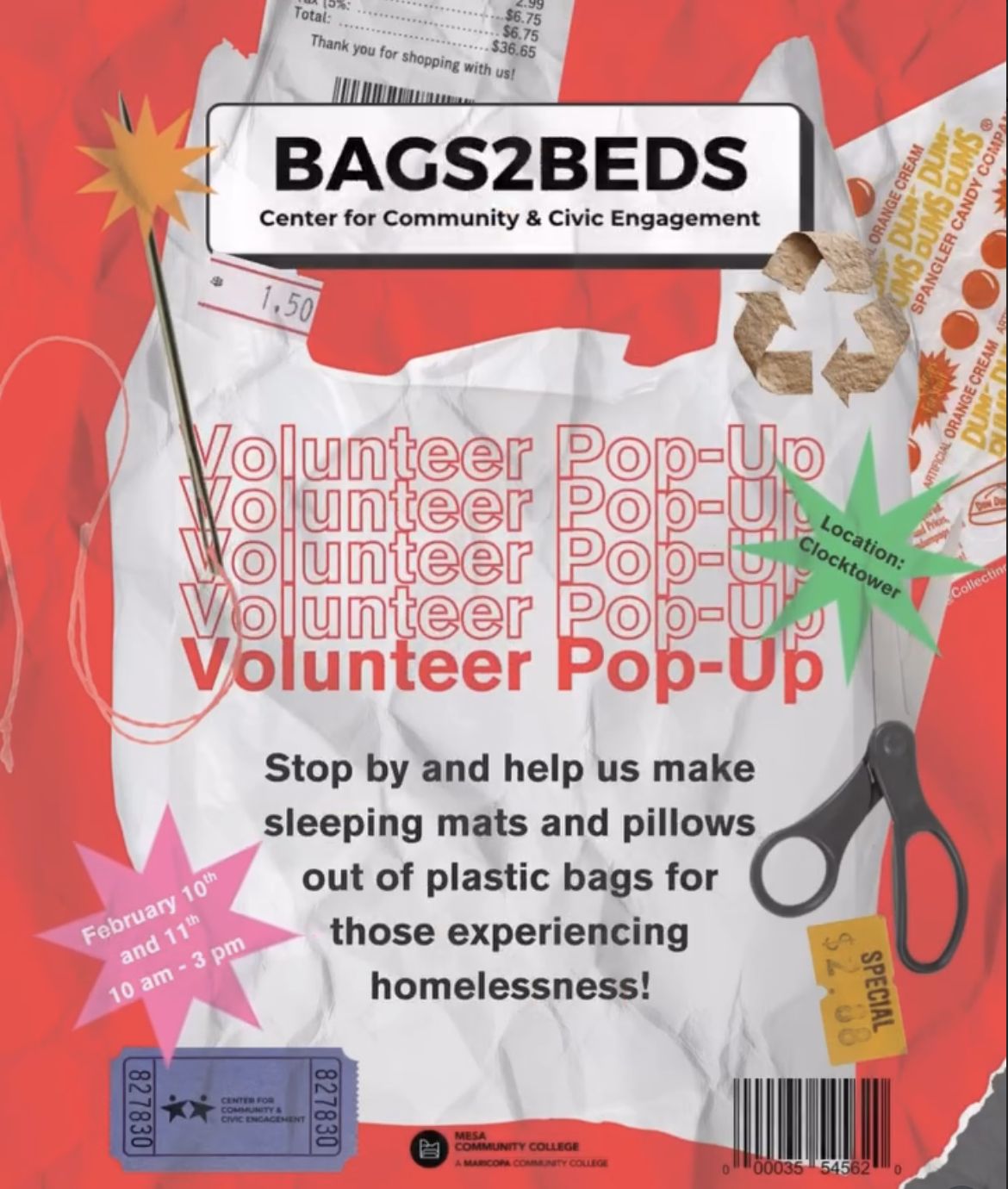
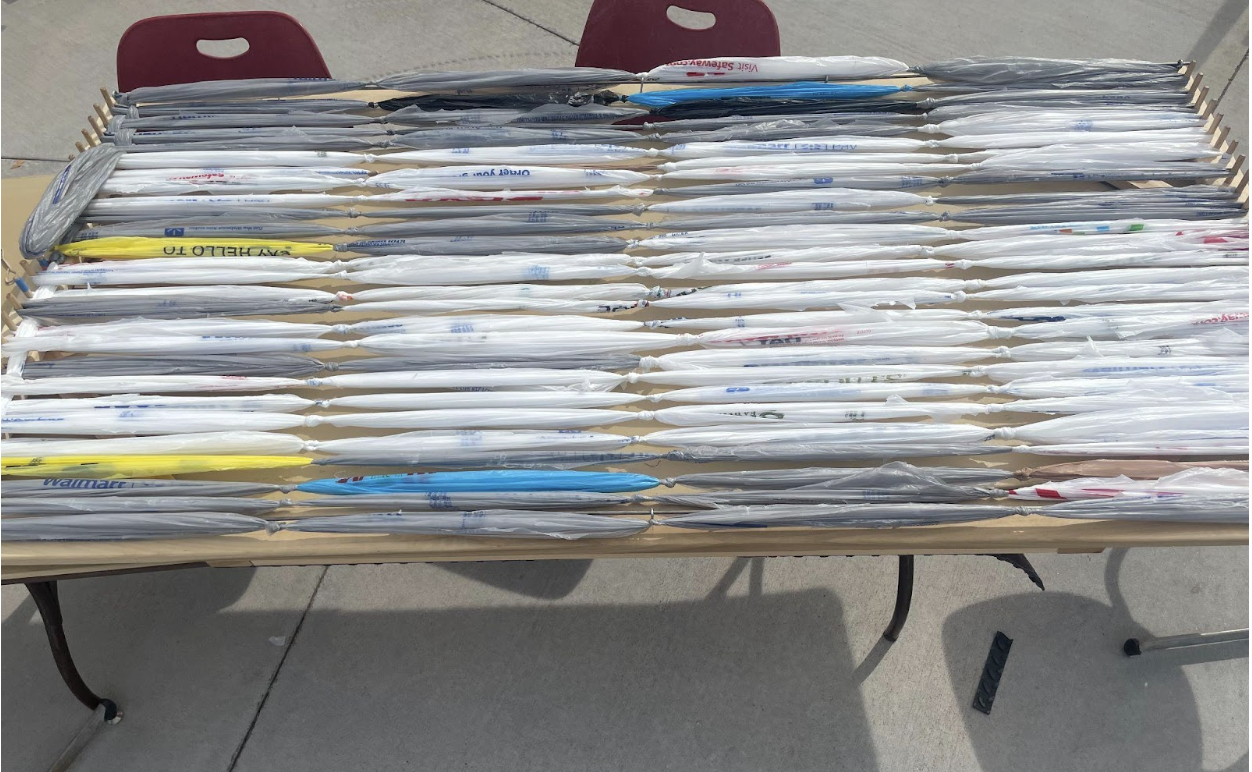
(Left) A promotional graphic to encourage MCC students to volunteer for the CCCE’s ‘Bags2Beds’ project. (Photo: Instagram/@mesa_ccce)
(Right) A sleeping mat in progress. Each mat uses upwards of 108 plastic bags. (Photo: Autumn Samsal/The Legend)
Rather than letting these grocery bags gather dust or get shipped off to a landfill, volunteers can donate them to be recycled and repurposed. This not only has the effect of reducing potential plastic pollution and maintaining a healthy environment, but it also provides free and more secure sleeping options for those facing homelessness.
To create a mat, volunteers take the recycled plastic bags and turn them into a material called plarn–short for plastic yarn–by cutting up the bags and knotting them together. The plarn is then woven together on a large weaving loom.
This is a lengthy process, with the volunteers completing a majority of the labor in their free time. The mats take hours of hard work and use hundreds of plastic bags.
“The making of the mat itself can take many hours. I would honestly say one mat probably represents at least like 24 hours of work,” said Leo Warnick, an engagement assistant with the CCCE.
The product of all those hours of hard work is a secure and water resistant mat, but the volunteers do not stop there. They take the leftover scraps of plastic and donated fabric to create pillows. Once completed, everything is donated to Homeless MATters AZ or another non-profit organization who will then distribute the mats across various homeless shelters.
Donations collected by the CCCE or brought in from the volunteers themselves provide all the necessary materials to make the recycled bedding. All of this culminates in a program which not only provides for those who are less fortunate but also helps showcase some of the services that the CCCE provides.
“[It’s] an opportunity to get engaged in the center and to attract people to come down here and check out more of our programs,” said Alejandra Maya, program coordinator for the CCCE.
Since the recycling project is not only limited to the occasional pop-up events that are hosted by federal work-study students, there is a lot of variety in how much someone can contribute to the program. It is open for everyone to participate Monday through Thursday from 9 a.m. to 5 p.m. and Friday from 9 a.m. to 3 p.m. in the CCCE office.
Students are able to stop by the office for any length of time and work on a mat or pillow at their own convenience. Those who may not have the time to contribute are able to donate plastic bags, fabric or sewing equipment for others to use.
“I think the most important factor that this project does in my perspective is it allows students to volunteer their time and energy into helping the community on campus anytime that they’re available,” said Warnick.