






SRP election saw high turnout, Turning Point loses majority
The usual low-profile election that appoints leaders to govern Arizona’s largest utility company turned into a contentious race and saw record-breaking turnout after Turning Point USA campaigned for their approved candidates.
The election on April 7 collected 36,000 votes for both the Salt River Valley Water Users’ Association (Association) and Salt River Project Agricultural Improvement and Power District (District) elections, over four times as many votes collected in the last Salt River Project election. In 2024, only 7,500 votes were collected in each race, according to SRP senior media relations manager Jennifer Schuricht.

TPUSA endorsements lost in an 8-6 majority. Unofficial results were declared April 8, but SRP announced official results in a board meeting Monday.
Although renewable energy advocates lost president and vice president seats to the TPUSA-endorsed Chris Dobson and Barry Paceley, many candidates from the adversary “SRP’s clean energy team” were newly elected to council and board positions.
Turning Point Action, TPUSA’s political campaigning arm, prioritized getting the conservative vote out in this year’s SRP elections to keep renewable energy out of Arizona. Despite their heavy influence on the turnout, the far-right, Christian-based organization co-founded by the late Charlie Kirk saw mostly losses.
“SRP continues to invest heavily in fossil gas operations and obstruct changes to its elections, going against the interests of its customers,” Sierra Club Grand Canyon Chapter Director Sierra Bahr said in a press release. “This election is a wake up call: communities want a voice and they want to see more clean renewable energy in SRP’s plans. With the Arizona Corporation Commission’s election in November, we hope to see this momentum continue.”
SRP provides electricity and water to millions of people across the Phoenix-Metro area. Mesa Community College is one of the entities across the state that relies on SRP for electricity and water.

Residents must own property within certain boundaries to be able to vote in the SRP election as part of a century-old voting structure when valley settlers first created the Association. Those settlers within the Association boundaries pledged their land as collateral to receive a federal bank loan to construct the Theodore Roosevelt Dam. How many votes a person received in the SRP election was directly tied to how much land they owned, according to Schuricht, a system called acreage voting.
Although SRP serves millions of people across the valley, many of those customers are ineligible to vote due to SRP’s static governing system.
While candidates can campaign on partisan issues, the SRP election is historically non-partisan, so voters do not see a political party listed next to the candidates’ names on their ballots. TPUSA’s involvement made this year’s election significantly more partisan, similar to the time they helped initiate a recall election for a Mesa City Council District 2 representative back in Nov. 2025.
Mesa resident Valorie Smith had never voted in the SRP election until this year, but she said she even encouraged her friends to vote this time around.
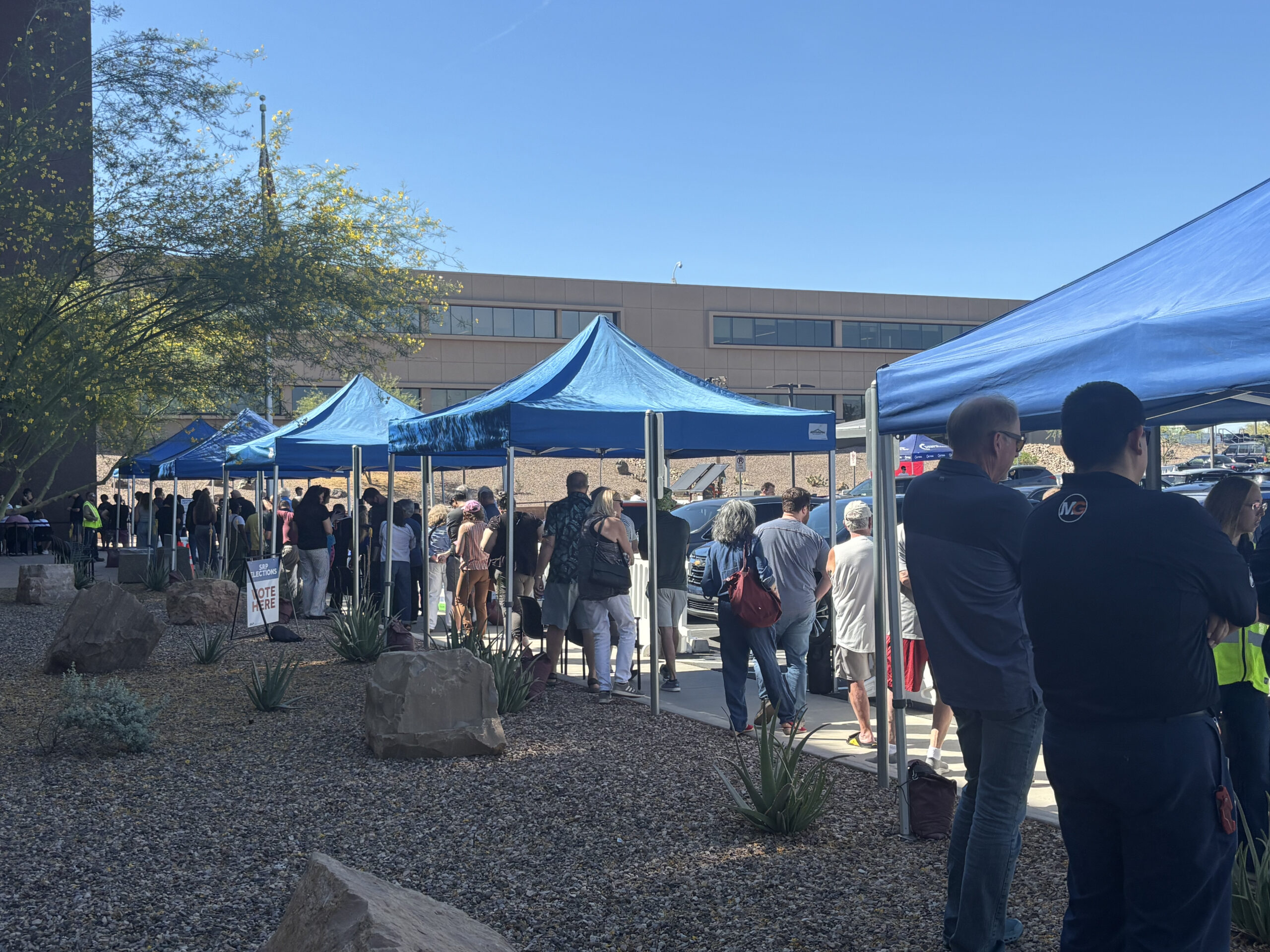
“I don’t like Turning Point USA. I think they should not be involved in anything at all, but especially not utilities. So I want the people that are on the board to be pro-sustainable energy,” Smith answered as she stood in line to drop off her ballot on April 7. “I’m voting for people who want to look at future generations.”
TPAction representatives set up a booth full of stickers and flyers with their endorsed candidates outside of the SRP office in Tempe on Tuesday, trying to reach last minute voters in the long line stretching around the building.
“We’re just supporting candidates and talking to people about why it’s important for them, and we’re super against the Green New Deal here in Arizona,” said Alyssa Goncales, a TPAction field representative. “[We’re] trying not to California Arizona.” Goncales said her group had been canvassing for over a year.
Although TPUSA’s involvement in the election was controversial among SRP voters, Schuricht pointed out that when third-party groups promote elections, they increase civic engagement.
“SRP is non-partisan, but for us, this is a part of the public process, and having outside groups gets people interested in our elections… that’s a good thing,” Schuricht said. “We want people to participate and, you know, having this large number of people come out has been great.”
The candidates will officially take office on May 4 and 5.